

A Brief History Of Our Pub in Norton St. Phillip – historic medieval inn with atmospheric rooms and traditional British dining
Welcome to The George Inn, Norton St Philip
Nestled in the historic, rolling hills of North Somerset just south of Bath, The George Inn is one of the most breathtaking and historically significant properties in England. Officially recognised as one of the oldest continuously licensed premier inns in the country, this awe-inspiring venue seamlessly pairs medieval architectural grandeur with high-end, boutique hospitality. The inn features an award-winning restaurant celebrating West Country provenance, an atmospheric stone-walled tavern space with massive open log fires, a beautiful sun-drenched courtyard, and a collection of individually styled luxury bedrooms. It stands as a bucket-list destination for heritage lovers worldwide.
The George Inn — A Journey Through Time
Origins and Early History
The historical background of the property dates back to the late 14th century, constructed around 1397 by the powerful Carthusian monks of nearby Hinton Priory. Rather than operating as a standard commercial wayside alehouse, it was built as a grand, multi-functional monastic trade house. The inn was designed to host the Priory’s famous, highly lucrative annual wool fairs, providing secure storage for valuable textiles on the upper floors while offering high-status accommodation for international merchants, wool-merchants, and pilgrims traveling across the Somerset landscape.
Architectural Development
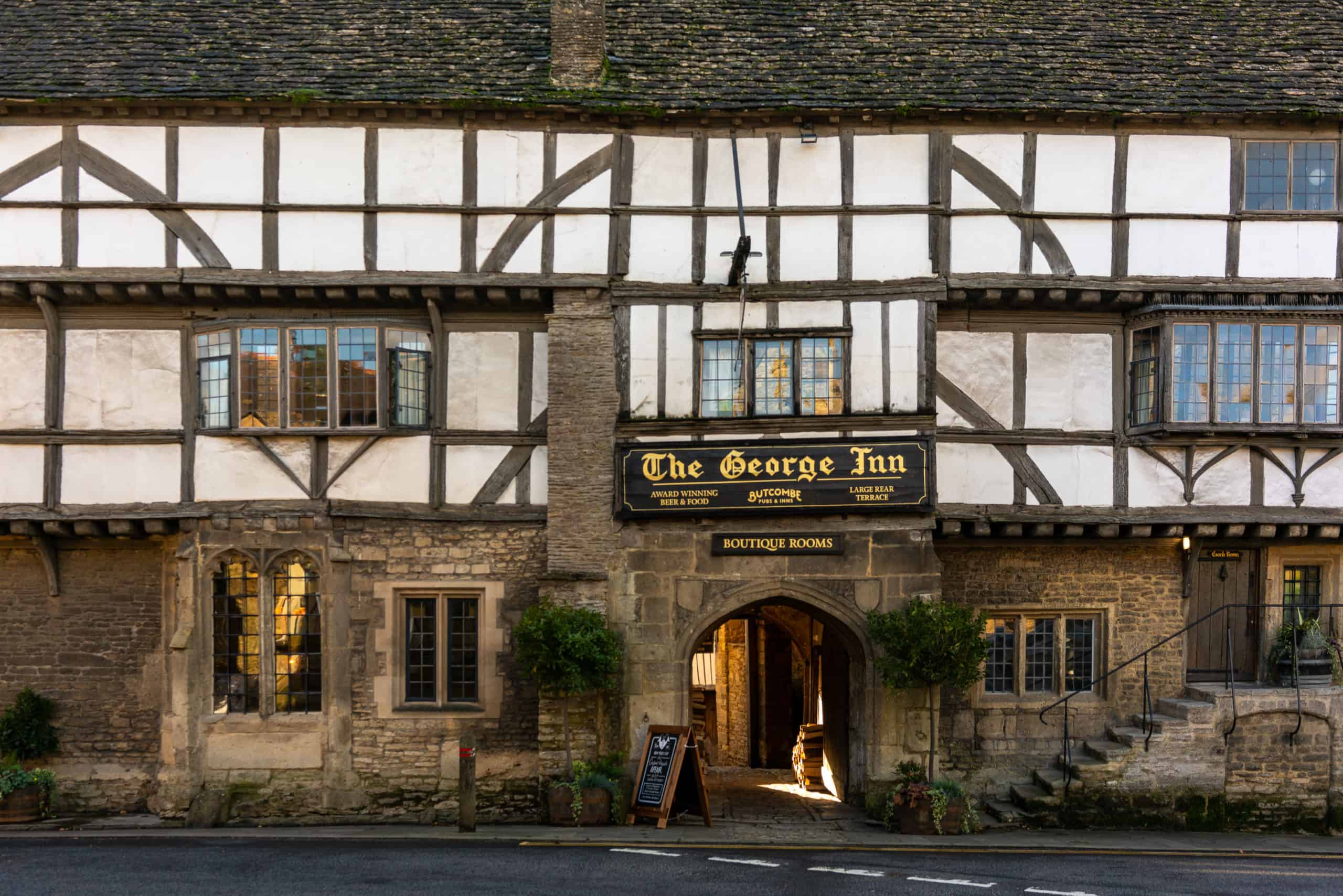
Architecturally, The George Inn is a spectacular, Grade I listed masterpiece that chronicles the evolution of late-medieval English building techniques. The lower storey is constructed from robust, local inferior oolite limestone, featuring an asymmetric stone archway that allowed packhorses and wagons into the rear courtyard. Rising above this stone base are two spectacular jettyed storeys constructed from magnificent timber-framing, completed in the 15th century. Inside, the inn has been beautifully preserved across a maze of low-beamed rooms, original stone flagstones, a stunning spiral stone staircase, and massive medieval fireplaces that have warmed guests for over 600 years.
Role in Travel, Trade, and Society
The George Inn has functioned as a central pillar of Somerset commerce and social hierarchy for centuries. Following the Dissolution of the Monasteries, the property transitioned into a highly successful coaching inn, strategically positioned to capture the busy trade and travel traffic navigating the routes between London, Bath, and Bristol. The inn housed extensive stabling and became the definitive civic hub for the village of Norton St Philip. It served as a court house, a market exchange, and a vital community sanctuary where the rural populace and traveling gentry crossed paths.
Historical Events and Notable Figures
The property has been an active stage for some of the most dramatic chapters in British military history. During the Monmouth Rebellion of 1685, the Duke of Monmouth used the inn as his military headquarters during the Battle of Norton St Philip; he famously survived an assassination attempt by a sniper while standing at one of the inn’s upper windows. Following the rebellion’s defeat, the notorious Judge Jeffreys used the inn’s main rooms as a courtroom during the “Bloody Assizes” to condemn local rebels. The inn’s historical prestige is further anchored by a verified visit from Samuel Pepys, who recorded in his diary staying here in 1668, calling it “a very old house” and praising its hospitality.
Cultural Legacy and Sustainable Dining
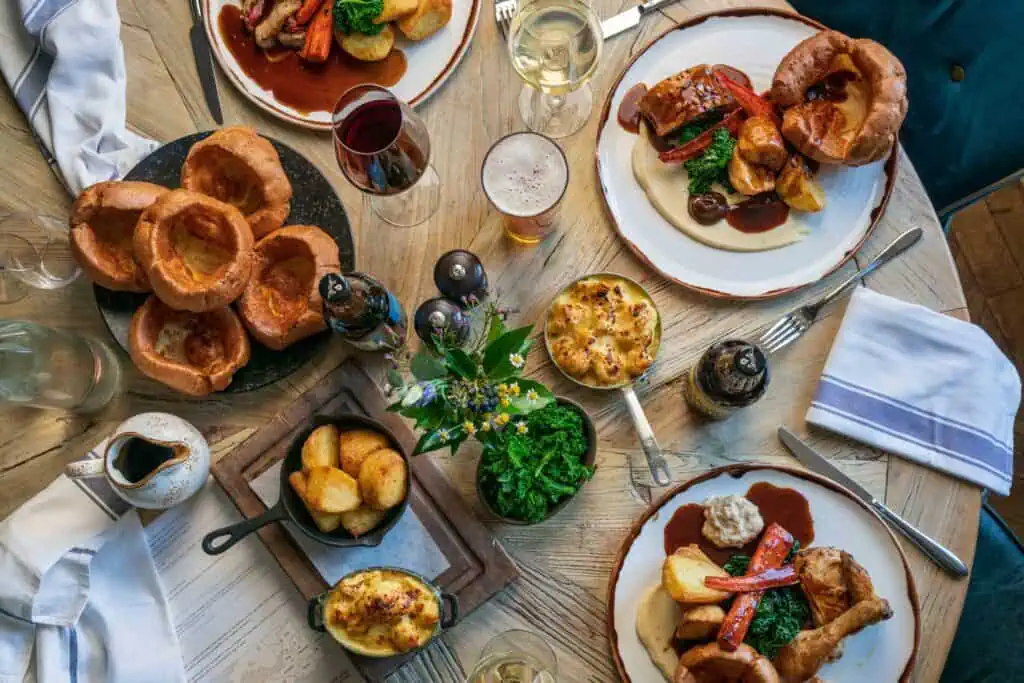
The unparalleled historical gravitas of the inn has long captured the attention of popular culture and creative circles. Its authentic, unaltered medieval aesthetic has made it a highly sought-after location for film and television directors, famously serving as the backdrop for major period dramas, including The Remains of the Day and Tom Jones. The George Inn channels this rich heritage through its approach to dining, championing absolute regional sustainability. The kitchen partners closely with independent West Country suppliers to construct a seasonal menu of elevated British classics, complemented by a selection of real cask ales, craft beers, and fine wines.
Modern Preservation and Country Staycations
Today, The George Inn thrives as a premier destination boutique hotel, successfully balancing centuries of history with modern comforts. Thoughtful structural restorations have updated its collection of country-house style guest bedrooms, combining neutral heritage tones and luxurious fabrics with antique features, exposed timbering, and elegant en-suite bathrooms. Completely dog-friendly, the property serves as a cozy local watering hole for parishioners and a magnificent, tranquil sanctuary for travelers exploring the historic city of Bath, the stones of Stonehenge, or the nearby Longleat Estate.
Conclusion
The George Inn successfully bridges the gap between an authentic, 14th-century monastic wool house and a luxurious modern country escape. We invite you to join us in Norton St Philip, step through our historic stone archway, and experience the exceptional British food, local ales, and world-class heritage hospitality that have defined this legendary Somerset landmark for generations.